
Welcome to Black Sheep, a spin‑off of my serialized memoir, SMIRK. If you’re looking for SMIRK, here’s the link to the complete book. Black Sheep is where I now follow similar themes of fraud and folly in other companies, industries, and individuals. This piece is part of a series; here is the link for Part I and for Part II.
A One-Way Ticket
Just hours after I hit “publish” on Part II of this series, the man at the center of an alleged $220 million cattle fraud who had gone on the run, leaving his wife to face a criminal indictment alone, was caught at Los Angeles International Airport.
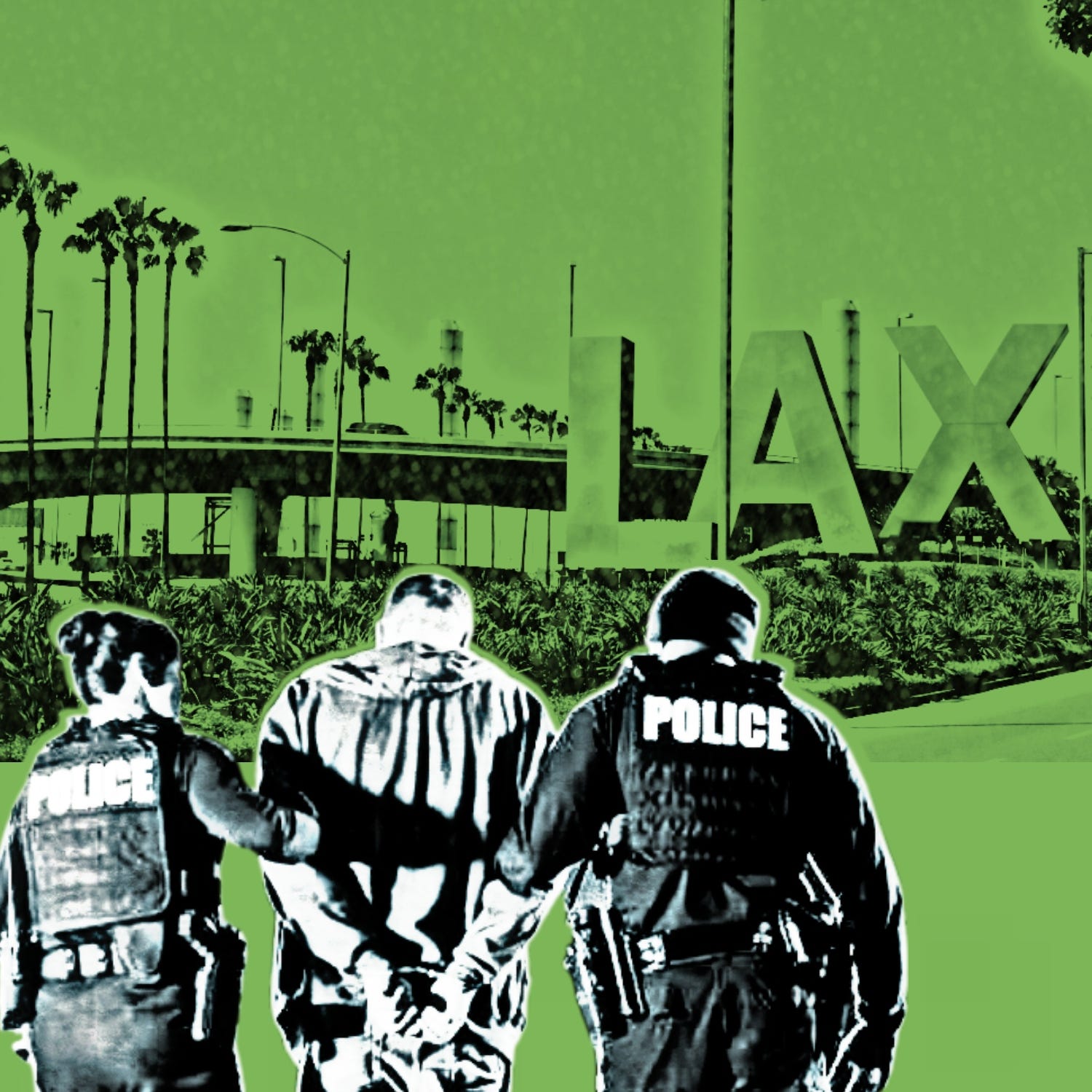
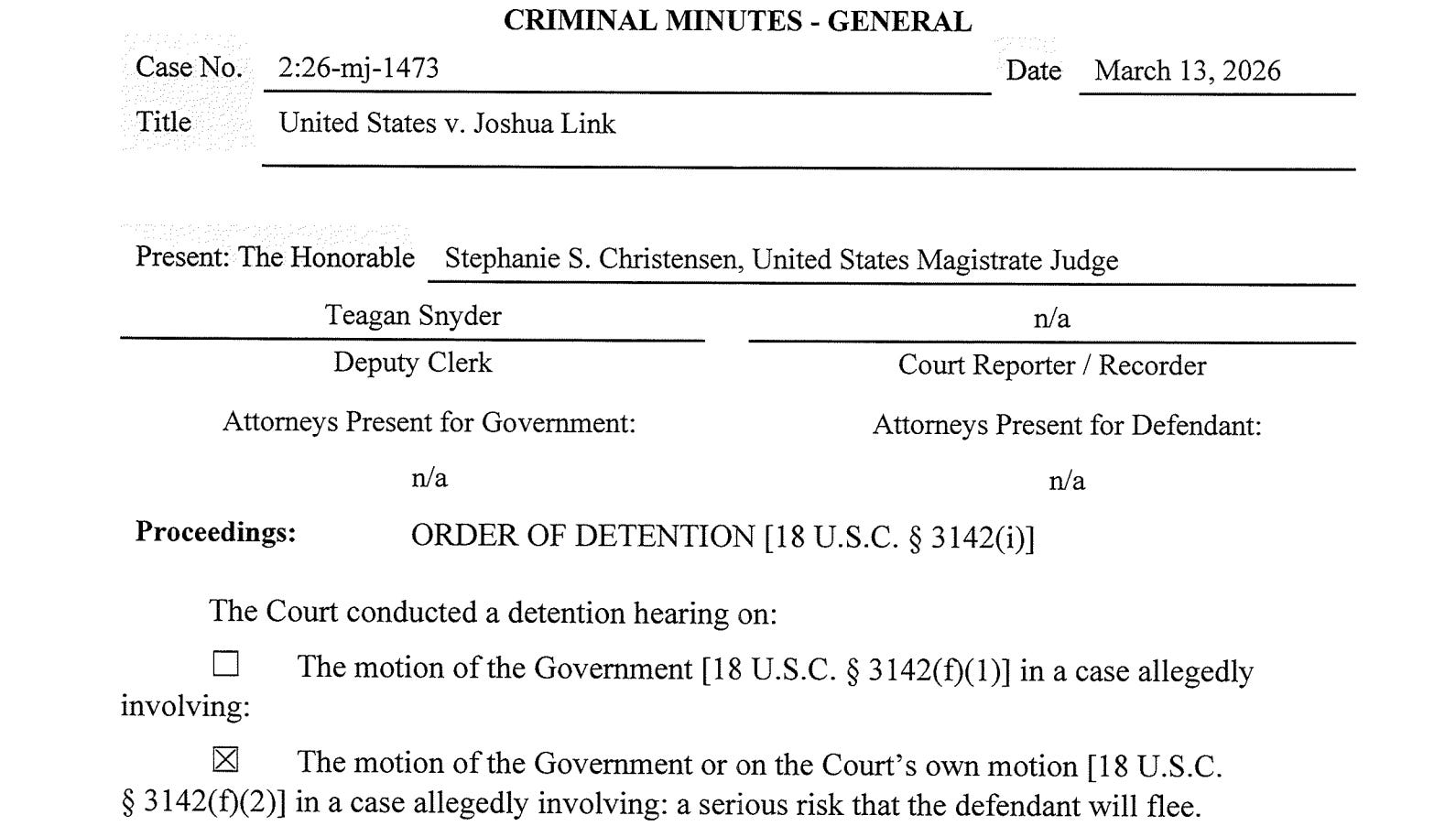
According to federal authorities, he was apprehended by US Customs and Border Protection at 11:45 am on March 9, 2026. Public records don’t say where Link had been coming from or where he was headed. But they do make clear where he ended up: in federal custody. The following day, in Los Angeles federal court, a magistrate judge ordered him permanently detained, finding him a flight risk, with no possibility of bail.
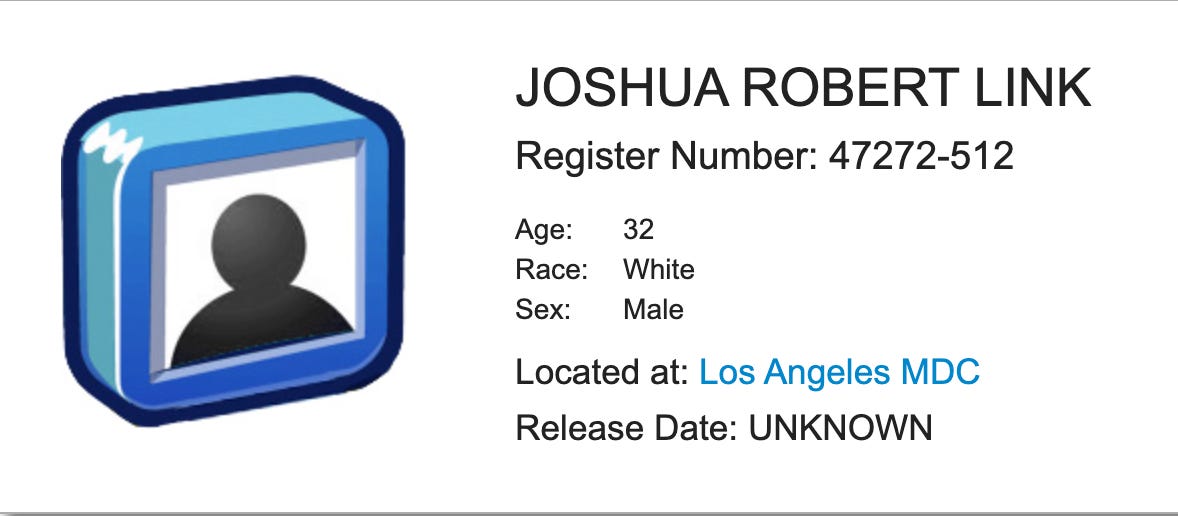
I checked the US Bureau of Prisons database; he was listed as an inmate at the Los Angeles Metropolitan Detention Center, a sleek fortress with slots for windows and a stack of cage-covered recreation decks. He would remain there until transferred to a facility in Northern Texas, where his criminal case was ongoing. From my experience as a journalist covering white-collar crime, I knew he was unlikely to emerge as a free man again for years — possibly many, if convicted and sentenced to a lengthy term.
Because BOP restrictions and court orders often limit contact between co-defendants, Link’s wife, Tia, was unlikely to receive permission to visit him. Their lawyers would almost certainly discourage them from writing, emailing, or speaking on the phone. Conversations would be recorded, scrutinized, and possibly used as evidence.
For the foreseeable future, the couple might only interact through looks exchanged across the courtroom, where he would sit, already judged in many eyes as, at minimum, a coward.
It was a humbling fate.
The “Ghost Herd”
Interestingly, records filed by investigators don’t paint Link as eager to head for the hills when his cattle investment company, Agridime, ran into trouble. They depict the opposite: Link stood his ground, seemingly committed to doing whatever he could to keep the business afloat. Unfortunately, as the documents allege, that included lying to investors.
After its founding in 2017, Agridime operated for several years, apparently doing as promised — allowing investors to purchase heads of cattle for $2,000 each, then delivering returns when the animals were eventually slaughtered and sold for meat. It’s possible some investors received the generous payouts the company advertised, of 15% to 32%, from honest practices.
But the wild swings in the cattle market during 2020 — resulting from drought, pandemic-related labor shortages, and the shuttering of the restaurant industry — proved too much for the small, young business to bear. Agridime would have been hemorrhaging cash as it struggled to both purchase cattle and sell meat at reasonable prices, while also paying investors on a promised schedule. Facing imminent failure, Link and his colleagues allegedly took a dangerous step in January 2021: they started selling contracts for cattle that didn't exist.
Federal investigators traced the shift to that same month, when Link and his colleagues continued meeting with investors, offering the usual pitch of guaranteed returns on cattle purchases. But when the funds flowed in, some as little as $10,000, some as much as $2.7 million, the money allegedly went elsewhere. According to prosecutors and securities regulators, it went into Agridime’s operations, to repay loans, into Link’s and other employees’ pockets, and — most critically for the “Ponzi scheme” label — to pay previous investors.
When investors expressed concerns and demanded proof of their purchases, Link and others at Agridime allegedly supplied electronic tag information for real, living cattle. But the same tag information for the same animals was allegedly provided to multiple investors simultaneously, essentially using a relatively small number of actual cattle to fabricate an entire “ghost herd.”
Based on the amount of money owed to investors in 2024, Agridime should have owned somewhere between 28,000 and 58,000 head of cattle. However, a receiver appointed by a federal judge found only 6,500.
Walls Close In
In the abstract, treating cattle as an investment probably makes sense. Sitting down in a restaurant, about to bite into a juicy hamburger, the average city dweller rarely spares a thought for how it got there. Similarly, driving along a rural highway, passing a herd of cattle grazing in a field, you might see them as interchangeable, sleepy-looking sources of more hamburgers.
But raising animals, especially huge ones of 1,000 pounds or more, and getting them slaughtered and sold is a complicated venture. Unlike piles of metal, agricultural products like grain or vats of petroleum, animals don’t sit still. They must be fed and cared for. They may be shifted between multiple lots and pastures throughout their short lives. Sometimes they get sick and die, or escape entirely.
For an investor, taking Agridime’s deal even under the best circumstances was far riskier than the company let on. Due diligence was virtually impossible for a third party located hundreds or thousands of miles from a herd, especially without any knowledge of the cattle industry.
Because of these blind spots, securities and commodities regulations are often found to apply when companies solicit passive investments, even in something as tangible as a cow or a steer. By 2023, state regulators in Arizona and North Dakota had identified this fatal flaw in Agridime’s model: the company wasn’t registered, anywhere, as a securities broker, despite selling what the regulators viewed as unregistered securities. Both agencies issued cease-and-desist orders.
Doubling Down
Link and his colleagues didn't let adverse orders from state regulators slow them down. As alleged by federal authorities, they kept selling mostly fictional head of cattle, with Link meeting personally with numerous investors while his wife, Tia, allegedly helped make assurances in person and over the phone.
By August 2023, months after both Arizona and North Dakota had ordered the company to stop, Tia was still allegedly working phones and email chains, telling one prospective investor that Agridime had just sailed through a USDA audit and was in regulatory compliance. When another investor wrote to ask whether it was truly "guaranteed that one year from now you will pay me $5,500," her reply, according to the indictment, was three words: "Yes, that is correct."
The group allegedly falsified dates on purchase records for cattle, making it appear that animals had been purchased promptly with investor funds when the money had already gone elsewhere — including to cover company costs and personal expenses, among them a $528,000 property for the Links in rural Missouri, what was probably a home, and more than $11 million paid to Link and others involved in the business as salaries and commissions.
Amid continuing problems securing enough inventory, Agridime allegedly persuaded a handful of local ranchers to “consign” their animals to the company, giving Agridime access to live cattle. Agridime allegedly promised the ranchers it would pay to feed the animals and have them slaughtered, returning a share of the profits. According to court documents, including filings submitted by the ranchers themselves, they never received any funds from the company.
Following the state's cease-and-desist order, Arizona’s security regulator brought an additional enforcement proceeding against Agridime over claims it continued to operate in the state. The US Securities and Exchange Commission filed an enforcement case against Agridime in December 2023, with the US Commodity Futures Trading Commission following suit in May 2024. Corporate assets were frozen, and the company was forced into receivership.
Link’s Last Stand
Through much of the escalating crisis, Link stood his ground. He defended the company to securities regulators. He testified in a deposition, explaining his role in the founding and management of Agridime and asserting that the “buck” stopped with him and his co-founder, a Texas businessman named Jed Wood.
Fighting the cease-and-desist order, Link argued to the Arizona Corporation Commission in June 2023 that regulators had fundamentally misunderstood his business. Agridime, he contended, was “a registered and bonded livestock broker and market agency” operating squarely within the USDA’s existing regulatory framework — not a securities dealer subject to Arizona’s securities laws. He accused the state of attempting to improperly “transmute cattle brokers into securities brokers,” and denied that Agridime’s customers were investors at all. Link demanded the order be vacated and all charges dismissed. The order stood.
In an August 4, 2024, filing to the federal judge overseeing the SEC’s case, Link objected strenuously to the agency’s determination that Agridime was a Ponzi scheme, while pledging to help ensure anyone owed money by the company was paid back. The one-page document states:
Defendant Joshua Link files this Response to Receiver’s Motion for Ponzi Determination. To Mr. Link’s knowledge, Agridime conducted legitimate cattle business and was not a Ponzi scheme. Accordingly, he writes to state his strong opposition to Receiver’s Motion for Ponzi Determination. Nevertheless, Mr. Link does not oppose the relief requested in Receiver’s Motion with the understanding that obtaining this designation will assist Receiver in maximizing the value of the Receivership Estate and, in turn, work towards ensuring that Receiver will be able to pay back the purchasers of cattle contracts and any outstanding bills owed by Agridime.
The court rejected his position. Agridime was declared a Ponzi scheme by the judge on August 13, 2024.
Sifting Through Remains
In business collapses, insolvencies, and fraud cases, courts can appoint receivers to act as neutral fiduciaries, charging them with sifting through the wreckage and figuring out who is owed what — and whether any money remains to pay them. In Ponzi schemes, receivers also take on the unenviable task of clawing back payments to the lucky investors who were paid with other investors' funds.
A receiver appointed to oversee the aftermath of Agridime provided a sobering financial picture:
As of 2024, the company was found to have raised $191 million from roughly 2,100 people, a figure the Justice Department later revised upward to $220 million. At least $58 million of those funds were used to make Ponzi payments to prior investors.
A quarterly update covering the final months of 2025 was starker still. The estate had $2.8 million in cash on hand, nine properties scattered across Kansas valued at roughly $1.1 million on Agridime’s books, and approximately 12,000 pounds of frozen meat sitting in a Kansas warehouse. Investors who were “net winners” — those who received payments funded by later investors — owed a combined $15 million back to the estate. But recovering it would be a long and fraught process. A similar effort involving Bernie Madoff’s investors, for example, took 16 years.
All told, investors had lost an estimated $115 million, with uncertain prospects of ever seeing more than pennies on the dollar returned.
A Broken Trust
Having picked my way through multiple federal and state court dockets and read whatever coverage I could find, I still don’t know when Link decided to run, or what specific event pushed him to it. That bothers me. What bothers me even more is this: growing up outside of Kansas City, I probably met many people like Link, hardworking, sincere Midwesterners just trying to get ahead.
From watching videos of Link, including one of his and Tia’s 2018 wedding at a Sedalia, Missouri farmstead, I didn’t get the vibe of a high-pressure, fast-and-loose hustler. He looked kind, warm, and dependable. His alleged scheme wasn’t a siren song to the greedy at heart, but an appeal to fundamentally decent values: offering an alternative to factory farming, supporting sustainable food sources, and treating animals raised for meat with as much dignity as they could hope for.
Link’s literal indictment felt, to me, like an indictment of my own biases. Whether the business fell off the rails through bad luck or bad faith, whether Link and his colleagues made desperate decisions or cynical ones, I would have expected people who resonate with my own sense of identity to take what comes and face the music, support their loved ones, and do whatever they could to help fix what they broke.
But Link didn’t do that.


