
Welcome to Black Sheep, a spin‑off of my serialized memoir, SMIRK. If you’re looking for SMIRK, here’s the link to the complete book. Black Sheep is where I now follow similar themes of fraud and folly in other companies, industries, and individuals.
The past election was widely interpreted as an “F U” to tech oligarchs. Along with handing Democrats control of the Senate and House, voters overwhelmingly approved restrictions against data centers, with 40 of 41 measures across 10 states passing. The lone exception was a town outside Fargo, North Dakota, which presumably doesn’t have much else going for it.
Heavily AI-exposed tech stocks took steep dives, expectations for an Anthropic IPO have shrunk, and Elon Musk mused that putting data centers in space, instead of on Earth, is “looking pretty appealing right now.” Yet, as much as the haters might gleefully claim otherwise, this stumble will almost certainly not result in a shut-off button for AI. Judging by the long arc of history, technological innovation moves relentlessly forward, whether everyone approves or not.
Boom-and-bust cycles are part of that momentum, with a bloom of exuberance often followed by a painful correction and the reframing of innovation into something most people actually find useful. Maybe that’s what’s happening now: We’re somewhere in the AI 1.0 era, with AI 2.0 just around the corner, like going from typing esoteric commands into a PC to pointing and clicking on a Macintosh, or from navigating crude and slow dot-com-era web pages to seamlessly shopping, browsing, and socially engaging from touch screen devices while lounging on our couches.
Or perhaps a more apt comparison is the dawn of the electric age. Both technological revolutions involved world-changing possibilities, massive financial investment, and the task of convincing a skeptical public to take a leap of faith. Both also presented serious safety risks. With electricity, those took the form of obvious physical dangers, like electrocution and fire. AI’s dangers are less tangible but still consequential, ranging from cybercrime and fraud to disturbing psychological effects on vulnerable chatbot users.
Similar to the current AI boom, early commercialization of electricity spawned a host of bizarre, unwieldy inventions, embraced only by early adopters and elites desperate to seem “modern” to their peers. Of course, history eventually got past that awkward stage. Electric lights got cheaper and better. Appliances that were complicated death traps when introduced evolved into items that we use safely and effectively every day. Wacky electric novelties either dropped off or were redirected toward more sensible use cases.
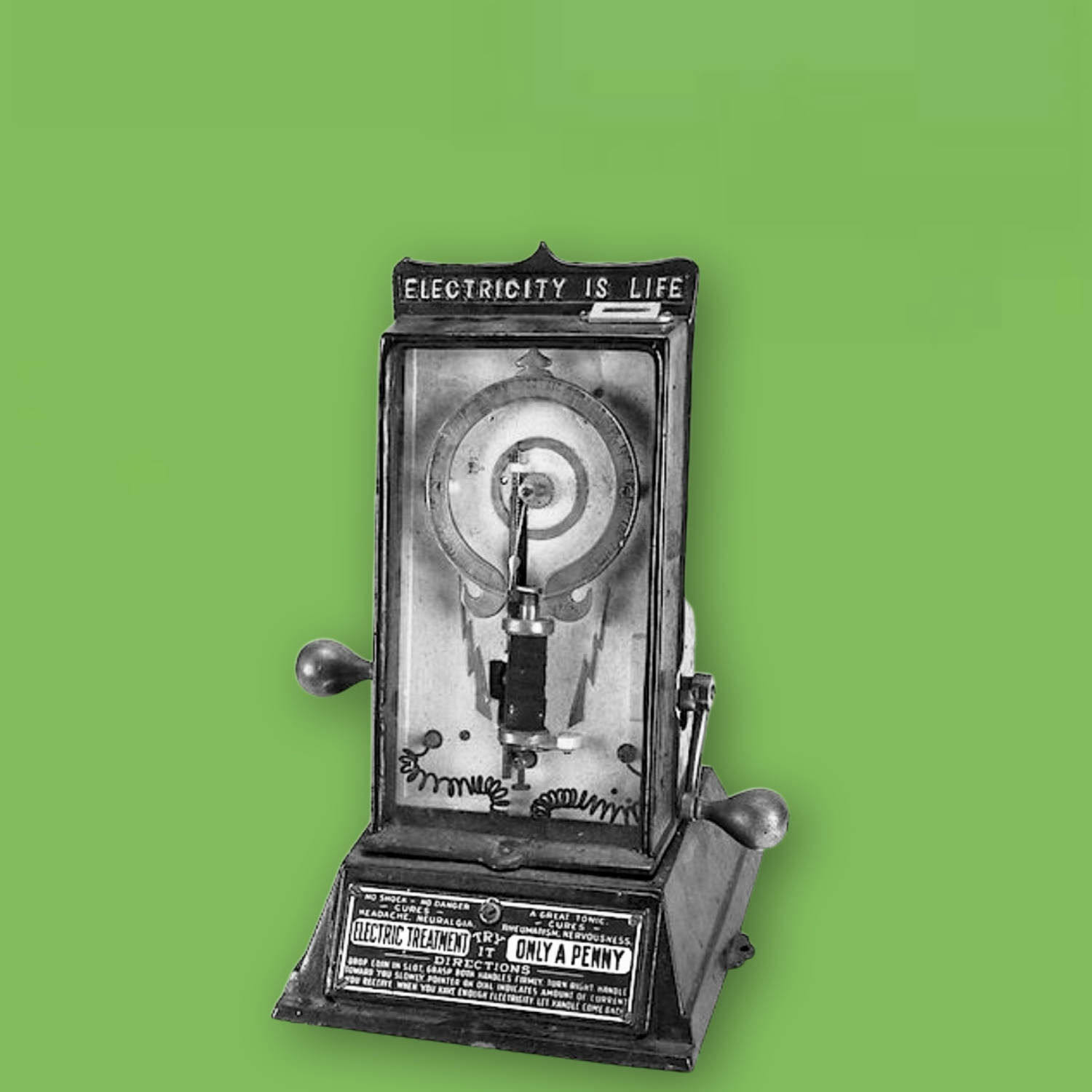
As I sought to explain in a Black Sheep post last year, major technological breakthroughs tend to become transformative once the value becomes broadly legible, not just interesting or useful to a select group. Electricity obviously got over that hurdle; AI undoubtedly will as well. The frustrating limitations of current chatbots and agents could very well give way to better products in the near future that virtually everyone will find indispensable.
Today, we are a century past the chaos and nonsense of the early electric era, with the technology so embedded into daily life that it’s difficult to imagine modern society functioning without it. But clearly not every harebrained idea stood the test of time. For entertainment value, and a little humbling context, let’s take a closer look at some of the more questionable ventures:
